
A Name for the Middle Band
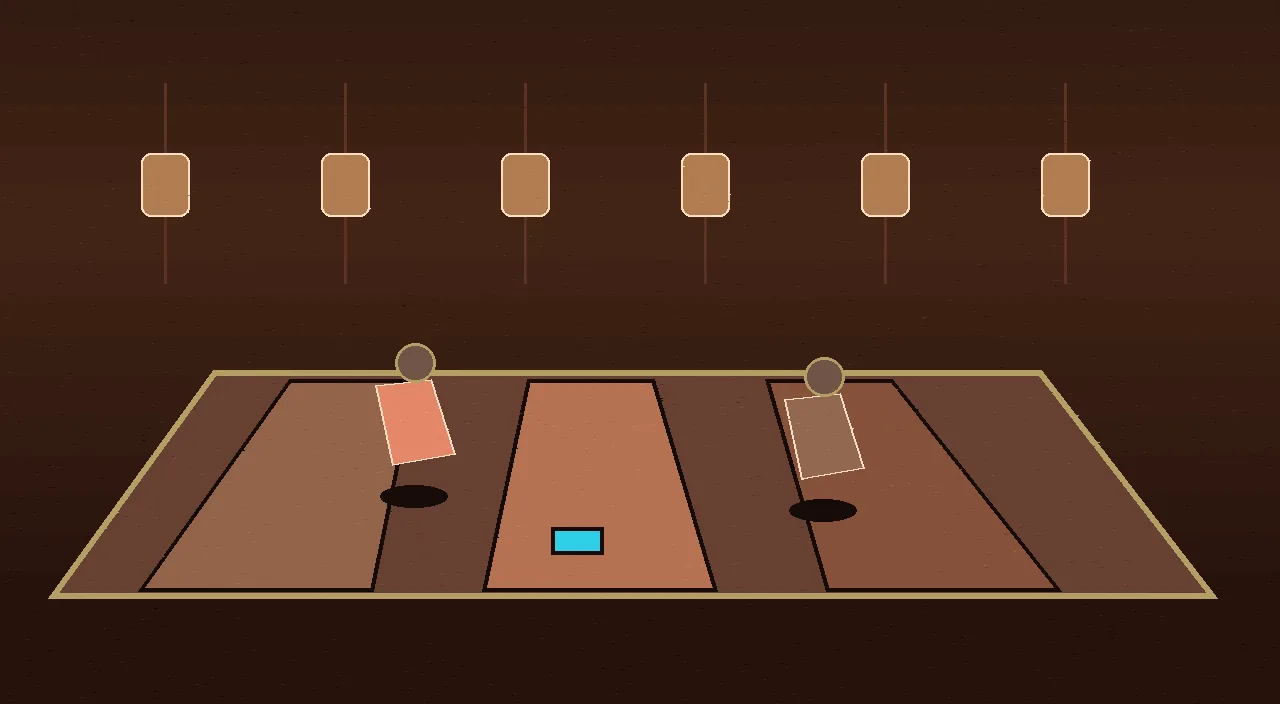
The central strip of the sketch seemed clear until it hosted a rival’s marker and a pending kit choice. The audience side of the room called it the middle band, the kit strip called it the second band, and the result avoided naming it at all. The exact positions were visible. There was no clear language for describing how a choice changed after the rival moved. We wanted a single name to travel with the part of the floor that mattered.
Put the word where the game uses it
The result view needs to say whether a selected group of virtual actions is current when a distance band changes. A visitor first sees the relevant word beside the floor mark. At the bottom of the result history, the same word appears after the kit. This record can tell a reader whether the earlier change occurred in that band or a different one. Repeating the label is useful only if it refers to the same state at both points. A bright highlight can indicate what somebody is viewing now. It should not overwrite historical range labels on the receipt.
In the filmstrip we treat a band as a named game region. It doesn’t denote a real-world distance threshold. We make its edges deliberately wide and readable because the exercise is about finding the relevant region after an animation. Keep the design at a scale where the reader can identify a border before introducing any subtle cue. A plate with a close, middle, and far layout can be shown beside a smaller version. The middle mark remains legible because its frame has its own angled corner.
When a position is between two labels
In a later comparison a virtual marker leans into the next region. The game uses a defined position at the instant it accepts the next event. If the printed marker is wider than that position, the renderer should indicate which reference point is used. A small dot on the strip can do this, along with the current label. The same reference can appear in a replay without requiring the person looking at it to estimate the size of the marker. A viewer can read the result and return to the exact frame where the region changed.
The illustrated case has enough room to show the floor and the strip together. On a phone the state appears below it. Put the region name before any lengthy explanation of the pending switch. The text of the replay can then add one sentence about why the new set of actions does or does not apply. In a small view those two details should be enough to carry the decision without a large legend. The full explanation remains available in the game casebook.
Look for two different readings
Our next check shows a switch under two almost identical circumstances. The rival is in the middle band in one and has just reached another one in the second. Ask the test reader which range their change would take effect in. If they point to different names for the same region, revisit how the labels move between views. If they identify the right band and still can’t say which kit applied, the kit status may need its own line. That distinction is exactly what a small test can expose.
A very early version used multiple distance words that referred to the same sample. We have narrowed them to one group of names recorded at each action. Changing that language should make the next result easier to scan. The open question is how to mark a new band without drawing the viewer’s focus away from the recorded choice. The range line should give a quick location and leave space for a later decision.
Open Range Rack for the concept. The companion entry The Slot Before the Bell traces the separate moment a game’s kit confirmation can take effect. Together the notes explain two visual readings in the same fictional round.