
The brass floor of Lantern Gallery
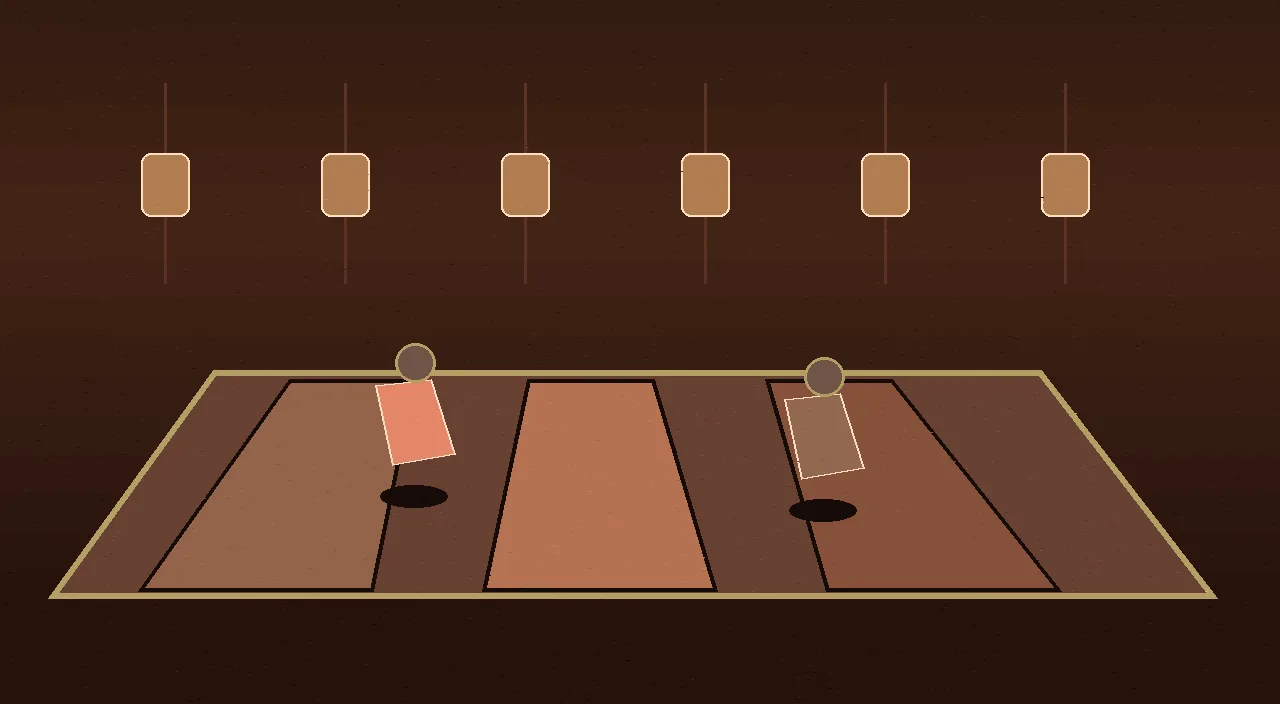
Range Rack is a game concept that uses a row of illuminated bands to show distance in a fictional encounter. The equipment is represented by two invented kit symbols animated beside the player’s figure. Each kit opens a different set of abstract actions in the game. The board is small enough that a viewer can see the rival’s band, the current kit, and the available change slot without moving the camera.
Make a decision that uses up space
A round starts with one currently active kit and one pending slot. The player can select the other kit or continue with the same one. A selection does not complete immediately. It takes one game beat to move through the status strip. Meanwhile the rival’s distance changes according to the pattern shown on the board. The result can acknowledge the pending choice without making its actions available yet. If a player chooses to keep the current kit, the slot remains open for a later decision.
The first encounter asks whether the player can identify which actions remain available after the rival crosses a range boundary. A role marker changes when a character reaches the middle band. The kit display keeps its old shape during the transition so it is clear that the player’s choice hasn’t applied. When the slot confirms, the new group receives a heavy border. A short note on the result repeats the time frame in which the game made that change. That gives readers a way to see why one option might still have been unavailable when they first looked for it.
Build a visual vocabulary around the rack
The painted hall uses copper light and cool outlines. The range bands cross the floor like columns of a ledger, so an observer can point to the right one even with color flattened. A cold accent appears around the group of actions waiting for confirmation. The current kit is a filled shape in another position. Tool symbols remain abstract and are named for their place in the fictional rules. The current label is kept near the play controls so the state has a purpose beyond atmosphere.
A page diagram shows the rack before and after the rival changes distance. Both pictures use the same floor landmarks. The comparison is easier to read if the change slot remains near the other parts of the state. On a narrow view the strip sits just under the scene. The notice about which band is active can appear before the player opens the list of possible actions. The game should communicate that movement happened without relying on the reader catching a sound or animation.
How far the concept has reached
The prototype plan tests one pattern with two reasonable kit choices. Our first goal is to learn whether somebody can tell what was available before the switch without opening a full manual. Another is making sure that holding the slot is an understandable decision rather than a behavior that looks like a missed input. We can change the location of a rival or the incoming beat and compare two otherwise identical rounds. If the same choice dominates those cases, consider changing the timing reward before adding extra equipment.
Visit A Name for the Middle Band for the range indicator study. Change at the Bell focuses on the gap between a received selection and the time it starts to count. Range Rack is in concept development and describes fictional game inputs.