
A round in the Brass Hour room
Change at the Bell imagines a small arcade game built around a row of time windows. When a player selects alternate equipment, the board receives the choice and writes it into a slot. The change can become active only at the next virtual bell. The rival’s position appears on the main axis, while the kit and its pending status have a separate space in the frame. The concept tests whether the view makes the two clocks tell a coherent story.
Watch a choice land on its own beat
Start with a kit already selected. The round’s next interval brings a change of distance. A player can open the change slot and choose a different group of abstract actions, then wait to see when the group becomes active. The game places an arrival tick beside the slot. A second tick comes from the checkpoint that confirms the choice. If a new distance band opens first, the current kit stays active while the decision remains visible on the strip. A short label explains this instead of allowing the player to guess whether the earlier selection was accepted.
The first design assumes a repeatable order of events. The next one can delay the checkpoint by one beat while retaining the earlier action. The player can compare the result while following the signal that moved. If a view makes two events look simultaneous, the scoreboard can print the order on separate lines. That lets a reader match the record to the picture without adding a long animation before every decision.
Quiet frames can still communicate timing
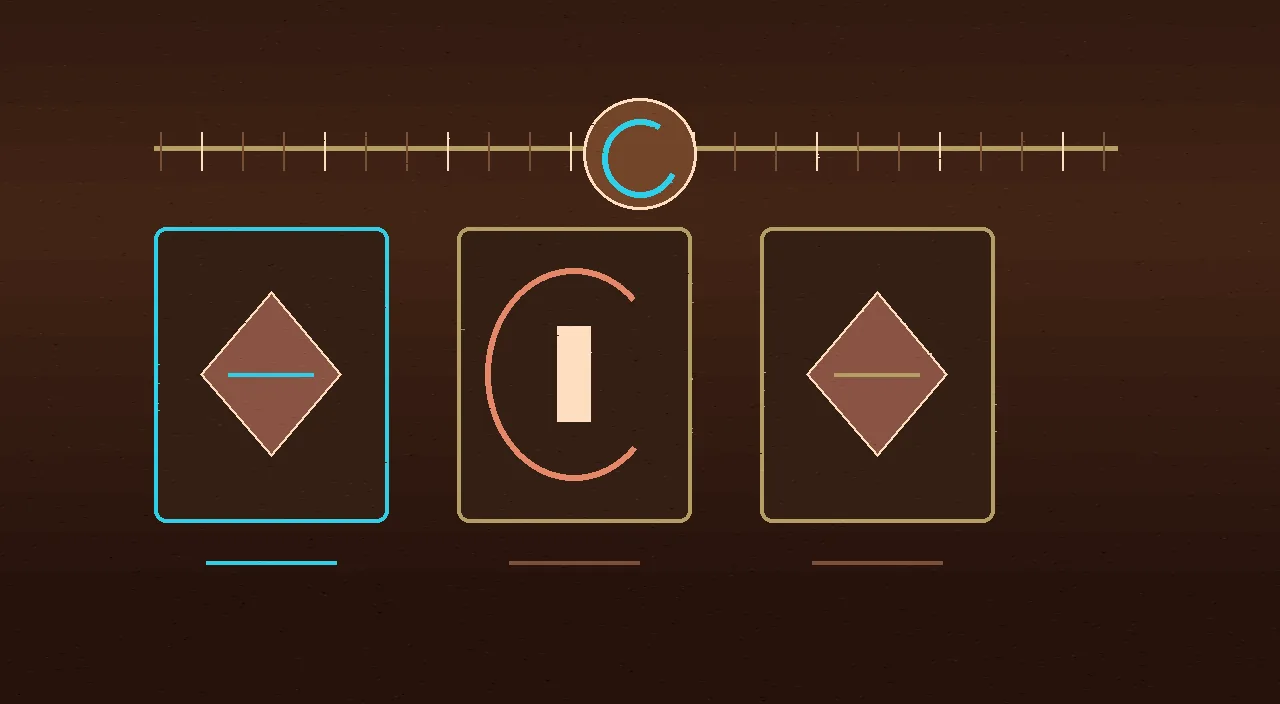
The art uses a long low room under warm light and a turquoise register at the edge. An unconfirmed kit is a hollow tab, and the active one has a solid lower border. Two degrees of light help suggest the bell in the painted scene, but the written clock marks do the real timing work. A person playing without sound can read a short word across the midline when the checkpoint arrives. The same phrase can appear in the replay, next to the selection’s original time. This makes a wide plate and a narrow control view consistent.
A short figure in the casebook shows where the two ticks sit. The history control can highlight one. The current selection before confirmation remains visible so a viewer never has to compare it against a moving animation alone. We can include a reduced-motion version that takes a direct step to the updated view rather than fading between tool shapes. This matters if the reader wants to compare a quick sound with a slower glance at the selection.
Decide what the end of the round should preserve
The concept is in progress. We plan to compare two runs. In the first, a player’s change is accepted before the distance moves. In the second, the shift is visible before the same choice can apply. Both contain an accepted switch, and the short result must make the different orders recognizable. If a player can identify the confirmed kit but not the point at which it replaced the old one, the archive needs a clearer link to the checkpoint. Later experiments can vary the beat, giving a real reason to hold the slot for another turn.
The Slot Before the Bell shows the recorded timeline. The game Range Rack asks a related question with fewer slots and a more prominent distance cue. Both are fictional design studies and use imaginary equipment groups as game tokens.